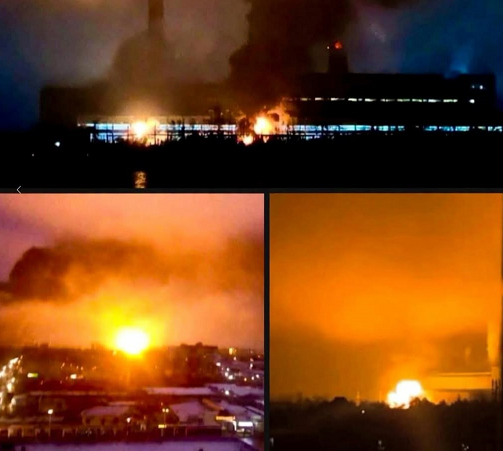
The world is facing one of its most tense geopolitical periods in decades, with growing instability across Europe, the Middle East, and the Indo-Pacific raising fears about the possibility of a broader global conflict. While most analysts believe a full-scale world war remains unlikely in the near term, the combination of military buildups, regional wars, political mistrust, and strategic competition has created an environment where miscalculations or isolated crises could escalate rapidly.
In Europe, the war between Russia and Ukraine continues to dominate security concerns. Despite occasional discussions about negotiations, the conflict remains unresolved, with ongoing drone attacks, missile strikes, and limited territorial advances. NATO countries along the alliance’s eastern flank—including Poland, Estonia, Latvia, Lithuania, and Finland—have increased defense preparations in response to concerns about Russian military behavior near NATO airspace. Although experts generally believe Russia is unlikely to launch a direct invasion of NATO territory, they warn that accidental confrontations, cyberattacks, or limited provocations could create dangerous escalation risks if communication fails during a crisis.
In the Middle East, instability remains deeply rooted despite periodic ceasefires and diplomatic efforts. The conflict involving Israel, Hamas, and regional actors continues to fuel humanitarian and political tensions. Relations between Israel and Iran remain especially sensitive following military exchanges earlier in the year that raised fears of a wider regional war. Iran’s nuclear program continues to concern Western governments and international monitoring organizations, while shifting alliances among regional groups add further uncertainty. Even so, many analysts argue that most governments in the region ultimately prefer containment and stability over a devastating regional war that could disrupt global energy supplies and draw in outside powers such as the United States.
Meanwhile, the Indo-Pacific has become a major focal point of strategic rivalry, especially regarding China and Taiwan. Beijing considers Taiwan part of its territory, while Taiwan maintains its own democratic government and receives support from the United States and regional allies. Chinese military exercises near Taiwan, combined with increased naval activity across the South China Sea, have intensified concerns about a future confrontation. Regional powers including Japan, India, and Australia are strengthening defense partnerships and increasing military preparedness in response to China’s growing influence.
Overall, the global situation reflects a world experiencing heightened competition and instability rather than an immediate march toward world war. Most governments remain aware of the catastrophic consequences of direct conflict between nuclear powers, which acts as a strong deterrent against full-scale war. However, experts caution that the greatest danger may come not from deliberate aggression, but from misunderstandings, proxy conflicts, cyber warfare, or regional incidents spiraling beyond control. Diplomatic communication, alliance coordination, and crisis management remain essential to preventing today’s tensions from evolving into a much larger global confrontation.